Aeon Igni

It's just you and the universe.

  • About Aeon Igni

Steampunk Worldbuilding Overview

Posted by Aeon Igni on November 23, 2014
Posted in: Science Fiction Writing. Tagged: science fiction writing, steampunk, worldbuilding. Leave a comment

How does one begin building a viable steampunk world? Well, not like I did. My first introduction to writing  Steampunk was in response to a call for stories for the second edition of Science Fiction Romance Quarterly magazine. I briefly wrote Cyrus and Evangeline’s story as a piece a little over 8,000 words.

I had the airships, the two main characters, and the plot; but what I didn’t have – and what really makes Steampunk unique – is the world. Steampunk requires more of the writer than simply a compelling plot and 3-dimensional characters. Like all subgenres of science fiction, it takes the detail to the next level, requiring the author to build the world around the characters with depth and fine detail of historical, scientific, and social aspects which make the story extraordinary, yet believable.

Over the next few weeks, I will share with you the aspects you need to consider to build a viable, unique Steampunk world; and what I did to make my own world a wondrous and compelling place to test my characters and allow them to overcome all obstacles and become who they were meant to be.

Villains – Shelley Coriell’s advice taken to heart

Posted by Aeon Igni on November 11, 2014
Posted in: Uncategorized. Tagged: author resource, character development, science fiction writing, villains, writing. Leave a comment

I took a class at the 9th Annual Scottsdale Library Workshops from award-winning author Shelley Coriell. Simply reading the name of the class, Villains: An Author’s Best Friends, was a huge enticement for me, and I looked forward to it for weeks in advance.

I have been especially interested in villains since, as a teenager, I saw Alan Rickman play the Sherriff of Nottingham in Robin Hood. The idea that villains could be creepy and funny was new to me. Since then, there have been other similar villains to love; Alan Rickman again as Professor Snape, Heath Ledger as the Joker, or Collin Farrell as Bobby Pellitt in Horrible Bosses.

I have found that when I write I tend to make my villains both creepy and funny, or at least give the scenes with the villains some humor if I can. Science fiction tends to lend itself fairly well to villains that are both sinister and comical. Jabba the Hut, Agent Smith, and Loki exemplify the wide range of these types of villains that science fiction has to offer. In my first novella, Salvation, I wrote the main villain as a reptilian with a speech impediment who loved his whip a little too much.

Back to Shelley’s class, one of her main points was that to accurately portray the villain’s perspective, an author must imagine an outcome where the villain is the victor. All too often, authors simply invent the villain as someone to foil the hero, rather than as the hero of their own world.

I took her advice in the steampunk series I am working on. I have made a serious effort to make each of the villains complete. They are already heroes of their own world, complete with back story and relationships that preexist the book, just like the heroes. They are formidable, relentless, and best of all, convinced that the evil they do is right. Each of the villains believes he is going to win – and in fact can’t imagine a scenario where he isn’t the victor.

I have found that after this exercise, as the heroes encounter the villains the battles are more complex and more emotional. There is anger, resentment, and fear, along with a whole bevy of other emotions from both sides. There is also an element of surprise that I have never written into my villains before, when the villain finally understands that the hero might be up to the task of defeating him.

So although the books are novellas and time spent with the villains is rare, I found that spending the extra time imagining the villains as the heroes of their own worlds – expecting to be victorious in the end – to be time well spent.

On to your opinion: Who are your favorite villains, and what do you think really makes them ‘come to life’ on the page?

Writing Great Dialogue – Tom Leveen Comicon Class

Posted by Aeon Igni on June 19, 2014
Posted in: Writing. Tagged: author resource, character development, comicon, Phoenix Comicon. Leave a comment

This class was given by Tom Leveen, the author of two books: Party and Sick. He asked us up front not to publicize too much of what he was going to talk about, because he makes a living from teaching his approach to dialogue as well as writing books, so I am just going to give some overarching points and maybe expand on them a little.

The first point, which I hadn’t really thought about in such an explicit way before, was that the word ‘dialogue’ means ‘two logics. He didn’t particularly expand on this, except to say that those logics should be in conflict (which we all know, right?). I’ve thought about this idea since then and realized that when I’ve been writing dialogue, I have been thinking mostly about the different personalities and desires of the characters. But there is a deeper place to go when you understand the idea that fundamentally, everyone’s brain is wired differently. There have been hundreds of books written on the topic of logic differences between men and women, between different cultures, etc. However, there are deep logic differences between every single person even in my own family – and we all lived in the same house for 18+ years.

All too often, I’ve seen books in which the plot relies on something as simple as the characters reamining silent when they should speak, or one character misunderstanding the other. It’s a shame, because deeper logical differences could be played upon to create drama and tension in a way that mimics the deep frustrations of real life rather than remaining on the surface of communication issues. I think delving into logic differences, as well as personality differences and goal differences, could bring added depth to the characters and to the plot of your work.

The second major idea that Leveen mentioned was that you should be able to think of your book like a stage play, with the characters acting out the plot. In a good stage play, the actors should be able to act out their parts with no props or costumes, and they should be just as powerful as if they were surrounded by all of the special effects. If you want to try a different twist on your story, imagine your characters acting out their roles on stage, and all they have are their actions and dialogue to drive the story forward. This gets you to focus on their words and actions, and to really ‘see’ them and their performance in your mind.

The last idea I will mention was simple, almost an afterthought, but I found it extremely powerful. He mentioned that 2 to 4 lines (maximum of 6), well-placed in the story are enough to vest the reader in your characters. It might be good to go back over your manuscript and make sure you have that key moment for each character where the reader realizes that he or she wants the character to succeed or find happiness.

Overall, I enjoyed this workshop and found Tom’s combination of stage history and writing to give him a fresh look at writing dialogue. I would recommend seeing one of his workshops if he is in your area. You can find him on the web at tomleveen.com.


Magic Systems: Urban Fantasy vs. Epic Fantasy – Panel at Phoenix Comicon

Posted by Aeon Igni on June 17, 2014
Posted in: Science Fiction Writing, Writing. Tagged: author resource, character development, comicon, magic systems, Phoenix Comicon, science fiction fantasy, science fiction writing, writers science fiction. Leave a comment

Panel members: Jaye Wells, Jim Butcher, Myke Cole, Patrick Rothfuss, Sam Sykes, and Stephen Blackmore. I’m sorry that I didn’t write down their names as they were speaking – I was too busy taking notes. This was an excellent panel, and I think more came out of the panel than any of us thought there would be going in. The room was packed, and doors closed fifteen minutes early because there were no more seats.

Scientific Magic versus Fantasy Magic

One of the first questions inspired the authors to try to define ‘scientific magic’ such as Harry Potter versus more ‘fantasy magic’ such as LOTR. They came upon the definition of ‘scientific magic’ as a magic system where there are definite rules, and they are apparent to the reader. The authors said that the more the rules are quantifiable, the more you can ratchet up the tension in your novel, because the reader knows the rules. Then, the reader feels smarter when they can see how the hero or heroine breaks the rules or twists the rules to his or her advantage.

On the other hand, fantasy magic is one that might have rules, but they aren’t apparent to the reader. For example, Gandalf appears and saves the day because…he’s Gandalf. His magic seems to come at certain times and not others, and there are not particularly any hard and fast rules that we know about it. However, fantasy magic can be done well, too, as long as the author knows the rules well.

One great point about magic inconsistency that was brought up was Star Wars – I believe it was Sam Sykes who said it. At first, Star Wars had a beautiful, fantasy-type magic – the Force. In the original movies, it was ephemeral and numinous. But then in Star Wars I, they tried to invent midi-chlorians and everyone rebelled, although they might not even have known why. It’s because there’s something wrong with taking a fantasy magic system and trying to turn it into scientific magic system – especially in the middle of a series.

Magic and Character Growth

Everyone agreed that there has to be power escalation throughout the stories, so that the characters grow. The stakes have to get continually higher and they have to face moral choices: What happens when they use magic? What happens when they can’t? What do they do when they face a tough decision (for example, they lose if they use magic, but they lose something else if they don’t)? You have to find new ways for your magic system to cause problems for your characters.

They also agreed that any time you put something new into your magic system, you have to think about all of the potential ramifications on the past, present, and future of the plot. They said the worst was the time turner. What happens when you can travel back in time and change the past? That is the most difficult and least thought out of any magic system.

Side note: Writing this just made me think of Star Trek. If you can slingshot around in the sun in Star Trek IV to save the whales, why can’t you do it in Star Trek (2009) to save six billion Vulcans? Even worse, Spock was alive for the prior trip. If you had just seen your whole planet killed – and you had previously been able to go back in time, wouldn’t you try to do it again?

Other Items of Interest

Interestingly, in the first half hour, one of the authors spent a lot of time talking about how you have to build your magic system before writing the plot of your stories because the heart of the story should be the amazing, complicated, flawed characters. Then in the second half hour, another author spent a lot of time stating that you have to build your plot before you build your magic system because the characters and the magic they do are a product of their environments and experiences.

The authors were asked what their favorite magic systems were that they didn’t write themselves. Titles mentioned were : The Last Airbender, The Master of the Five Magics, Last Call, and The Chronicles of Amber.

When asked how to build a magic system, they gave some tongue-in-cheek answers:

  1. Live somewhere cheap – because you need tons of time off to develop it.
  2. Do stuff you think is fun, because you’ll be playing around with it and tweaking it for years.
  3. Find ways to break it.
  4. Have plenty of Beta Readers try to break your magic system. One author, I believe it was Patrick Rothfuss, said a number around ten (!).

My Summary

So, what I gathered is that each of these authors had a different, unique magic system, and each of them formed it in a different way over time. I think the overall point they were making is that it doesn’t matter how you do it, as long as you have a plan, stay consistent, and don’t change the system halfway through. In addition, the overall purpose of including magic in your books is NOT the magic itself. While the magic might be cool and awesome, the only purpose of magic in the story is to help the characters grow, it just gives them another avenue to do so.

Phoenix Comicon – The most underrated resource for authors I’ve ever seen

Posted by Aeon Igni on June 11, 2014
Posted in: Science Fiction Writing, Writing. Tagged: author resource, comicon, Phoenix Comicon, science fiction fantasy, science fiction writing, writers science fiction. Leave a comment

I wanted to comment on the whole Phoenix Comicon experience, and why it is an absolutely amazing resource for authors. I was astounded by the quantity and quality of classes offered. There were five rooms for Books/Authors, and most were full in every time space. Classes were an hour long with 30-minute breaks in between – which means every 90 minutes from 10:30 am to 8:30 pm there were four or five classes for authors to choose from.

Many of these classes are valuable to you no matter what genre you write in. Of course, there are the typical science fiction/fantasy classes:

  • Fantasy Worldbuilding
  • Urban fantasy and epic fantasy
  • Worldbuilding Economics
  • Fantasy that defies description (or doesn’t fit neatly into a niche)

But there were also other classes that were offered on a wide variety of topics and genres:

  • Young Adult Writers
  • Dialogue
  • Utopian versus Dystopian societies
  • The Military in Speculative Fiction – with a military guy
  • Writing Rogues
  • Writing across genres
  • Writing Humor
  • Constructing a Mystery plot
  • Crime writing for non-crime writers
  • Description in fiction
  • Evening Erotica
  • How heraldic symbols are used in pop culture
  • Fairytales
  • Poetry

Even the universities got in the action: ASU presented their hieroglyph project for authors and scientists to come together to create a better future and UofA presented a panel on Real Science versus Pseudo Science

There was a good mix of NYT bestselling authors and well-known local authors, and I felt that each class gave me a good bit of unexpected information. And of course, you get the other added benefits of being at *Comicon* – costumes, actors, authors, artists, demonstrations, and parties.

Overall, it was an incredible experience for $80. I paid $150 total including parking for the three days and took sandwiches and cliff bars to keep my energy up and avoid the long lines for food between classes. One thing to note is that many of the classes with more famous authors were full at least ten minutes before the class time began – so that made it difficult to wait in line for food or coffee because you had to be physically present or you wouldn’t get in. I went straight from one class to the next to scope out the popularity before deciding whether to take a coffee break or not.

But crowds and price notwithstanding, I would definitely recommend the experience to any author who is looking to broaden their writing horizons. I came back invigorated, with new purpose and perspective, and most importantly, ready to write!


Project Hieroglyph

Posted by Aeon Igni on June 9, 2014
Posted in: Science Fiction Writing. Tagged: comicon, dystopia, Phoenix Comicon, project hieroglyph, science fiction, science fiction fantasy, science fiction writing, writers science fiction. Leave a comment

hieroglyph

I went to the Phoenix Comicon over the weekend, and learned about the Hieroglyph Project started by Arizona State University. The professors, postgraduate students, and science fiction authors who sat on the panel brought up a few good points that I think all of us who write science fiction in any capacity should be interested in.

The point of the hieroglyph project is to get science fiction authors to imagine a future world that is good – utopian rather than dystopian. They argued that the dreams that we dreamed only a few years ago are becoming real now. Scientists can implant light-sensitive neurons and actually control how animals behave using lights – and that is not future technology, it is at this very moment.

They brought up the point that in our science of today, in one sense we have all the control over what we are doing in the laboratory. But in another sense, we have no control over it. We don’t know that the long-term outcomes are going to be of many of the experiments we do today – working with smaller and smaller molecules, working with DNA, or hacking the brain.

We need science fiction writers to write the narratives of what will happen with these innovations. Are we going to use light-sensitive brain technology to rehabilitate prisoners? Or are we going to use it to control the population so that no one resists the government?

Right now, everyone is writing dystopian fiction because it’s easy. Cynicism looks smart – and if you have a conspiratorial mindset it’s easy to think of 20 ways in which light-sensitive brains could be used in a negative way. But what we really need in society is those people who will think about these things in a positive way – thinking about how these things can benefit society. A difficult task.

A second theme of the panel was that the technological future is not ‘in the future’ so much as it is here now. For example, our planet is already terraformed. If you live in a city, use roads, or live in a house, you are living in a terraformed world. We always like to think of terraforming as happening somewhere far away, but not enough people are looking at how terraforming it is being done here; how it has affected this planet, or how it could be done better in the future.

In addition, many underclass people already live in a science fiction dystopia. They are negatively influenced by technology because they haven’t been able to keep up with the rate of change. They may never own a computer, may not understand how to use one, and may even be left out of the middle and upper class conversations of the future because they can’t understand the vocabulary. *Case in point – one of the speakers asked us to please ‘defrag the room’. Everyone in the room understood that the phrase meant to scoot toward the middle because there were too many empty chairs between people, and automatically started moving toward the center. That is a very high-level example, but how many people would not have understood that phrase? Technological terminology is going to be even more of a barrier in the future than it is now, and high society is going to seem even more unreachable to those at the bottom if they are not able to become fluent in computers or technology…what happens when books disappear?

One last point, which is fast becoming an important factor in the lives of young people today. Due to information streaming, it is totally possible for you to live in your own little bubble – choosing your own online friends, your own news, and creating your own space where you are never challenged. This is a terrible thing for us, because the real world is all about conflict – it’s all about being able to articulate your thoughts, stand up for what you believe in, and argue persuasively against those who don’t. Teenagers who aren’t challenged will grow up into adults who aren’t able to respond to challenges without resorting to insults or running away – and in my opinion a society which looks like a bad comedy news show is not a society which is going to get anything done to improve the lives of the people within it.

As science fiction writers, I think it is good for us to have these types of conversations at these types of events. Every word we write will hopefully touch hundreds if not thousands of readers, influencing their minds, and through them, the future.

If you would like to join Project Hieroglyph, it is available to the public and especially to science fiction authors: http://hieroglyph.asu.edu/

Desert Dreams Conference 2014

Posted by Aeon Igni on April 8, 2014
Posted in: Writing. Tagged: author resource, Desert Dreams 2014, Jami Gold. 1 Comment

Hi all,

I had the good fortune of being able to go to the Desert Dreams 2014 Writers Conference in Tempe, Arizona last weekend. The weekend was filled with interesting workshops and speakers, as well as a book signing with Sylvia Day, Jennifer Ashley, Callista Fox, and many other romance writers.

I met Jami Gold during the weekend, who presented a fabulous workshop called ‘Twitter for Introverts’. She has also written a fabulous blog on the top five insights she learned at the conference, and I added an insight I learned at the Storyboard workshop.

Here’s the link: http://jamigold.com/2014/04/5-insights-from-bestselling-authors/

All the best!

Aeon

Welcome to my blog!

Posted by Aeon Igni on November 22, 2013
Posted in: Uncategorized. Leave a comment

Dear Readers,

Welcome to my blog! I write science fiction romance, and while not new to writing, I am new to publication!

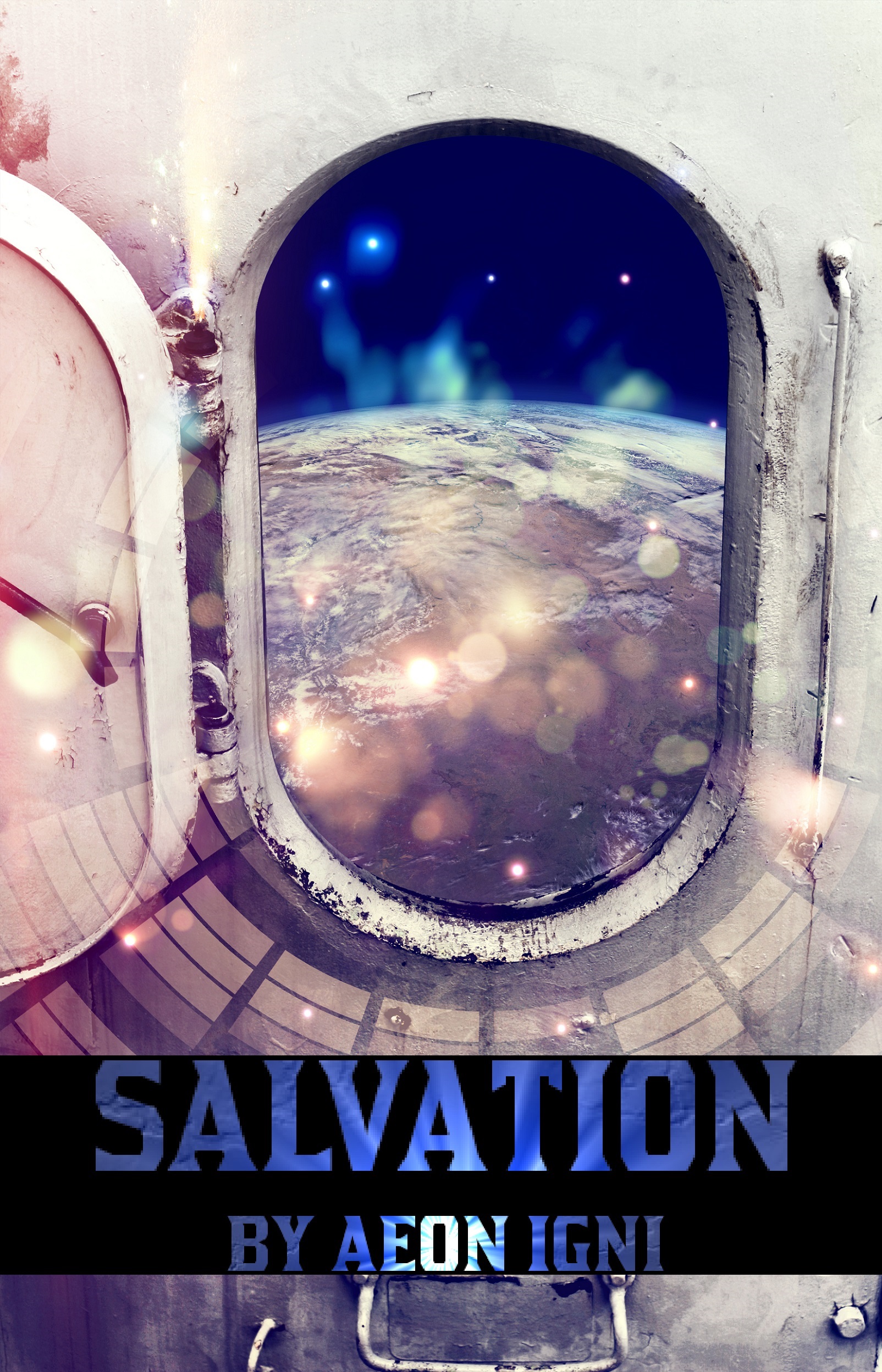
My first book, Salvation, was just published with Fantasia Press in October, 2013. I am now writing a sequel, Transformation, which I hope to have out in December. You can find the book on amazon.com for 99 cents! Here’s the link: http://www.amazon.com/Salvation-Aeon-Igni-ebook/dp/B00GB1O4MC/ref=sr_1_1?s=digital-text&ie=UTF8&qid=1385090165&sr=1-1.

I hope to use this blog to discuss any and all aspects of writing and publishing; sharing amazing ideas from other authors along the way! Feel free to post your thoughts along with me!

All the best,

Aeon

Salvationcover

Posts navigation

Newer Entries →
  • Search This Site

  • Enter your email address to subscribe to this blog and receive notifications of new posts by email.

    Join 119 other subscribers
  • Recent Posts

    • MOONLIGHT free download on Amazon!
    • Revelations of an Indie Author
    • Liza O’Connor’s Surviving Terranue and Pre-ordained Death
    • Liza O’Connor : Surviving Outbound
    • Salvation Quote #10
  • Archives

    • May 2016
    • December 2015
    • September 2015
    • August 2015
    • July 2015
    • June 2015
    • May 2015
    • April 2015
    • January 2015
    • December 2014
    • November 2014
    • June 2014
    • April 2014
    • November 2013
  • Tags

    Age of Ultron author resource authors Avengers black widow character development characters comic comicon conference death Desert Dreams 2014 dystopia hulk Jami Gold magic systems movie personal Phoenix Comicon poem project hieroglyph quote reading romance salvation science fiction science fiction fantasy science fiction writing songs steampunk true love villains worldbuilding writers science fiction writing writing inspiration
  • Categories

    • comic (1)
    • inspiration (8)
    • movie (1)
    • Personal (6)
    • poem (1)
    • Quotes (10)
    • Romance (5)
    • Salvation (10)
    • Science Fiction Writing (22)
    • songs (4)
    • Uncategorized (8)
    • Writing (9)
Create a free website or blog at WordPress.com.
Privacy & Cookies: This site uses cookies. By continuing to use this website, you agree to their use.
To find out more, including how to control cookies, see here: Cookie Policy
  • Subscribe Subscribed
    • Aeon Igni
    • Join 34 other subscribers
    • Already have a WordPress.com account? Log in now.
    • Aeon Igni
    • Subscribe Subscribed
    • Sign up
    • Log in
    • Report this content
    • View site in Reader
    • Manage subscriptions
    • Collapse this bar
 

Loading Comments...